You want to choose the right chamber for your testing protocols. If you value fast transitions, a 2-zone thermal shock chamber may suit you. If you need greater flexibility or must meet strict compliance, a 3-zone thermal shock chamber could be the answer. Consider your priorities and industry standards before you select a Thermal Shock Chambers model. Matching features with practical needs leads to reliable results.
Key Takeaways
- 2-zone thermal shock chambers offer faster temperature transitions, making them ideal for rugged components and high-throughput testing.
- 3-zone thermal shock chambers provide greater flexibility by including an ambient phase, which is better for delicate products and real-world simulations.
- Choose a 2-zone chamber for rapid cycling and simpler protocols, or a 3-zone chamber for more complex testing and compliance with stricter standards.
- Regular maintenance, such as checking refrigeration and seals, ensures accurate results and extends the life of your chamber.
- Consider future testing needs and industry standards when selecting a chamber to ensure it meets both current and evolving requirements.
Thermal Shock Chambers Overview
What Are Thermal Shock Chambers
You use Thermal Shock Chambers to test how products respond to sudden temperature changes. These chambers play a vital role in industries that demand high reliability, such as automotive, aerospace, and electronics. The main function of a Thermal Shock Chamber is to move samples rapidly between hot and cold zones. Each zone maintains independent temperature control, which allows you to simulate extreme conditions. This process accelerates thermal stress and helps you reveal material defects that might not appear under normal conditions. Leading manufacturers design these chambers to ensure quick recovery after each cycle, so your tests remain accurate and consistent.
Tip: You can use Thermal Shock Chambers for a wide range of applications, including semiconductor testing, battery validation, and military equipment assessment.
Why Use Thermal Shock Testing
Thermal shock testing gives you valuable insights into product durability and safety. By exposing your products to rapid temperature shifts, you can identify critical design flaws and material weaknesses early in development. This approach helps you improve product quality and avoid costly recalls. You also gain data that supports better design decisions and long-term performance improvements.
- Ensures your products meet strict safety and reliability standards.
- Provides early detection of potential failure points.
- Helps you maintain a competitive edge by delivering safer, more reliable products.
- Reduces the risk of recalls by validating conformance to industry benchmarks.
Thermal Shock Chambers act as a safety check for your products. They help you confirm that your devices can withstand harsh environments and meet the demands of real-world use. When you use these chambers as part of your environmental test chamber lineup, you strengthen your quality assurance process and build trust with your customers.
2-Zone Thermal Shock Chambers Explained
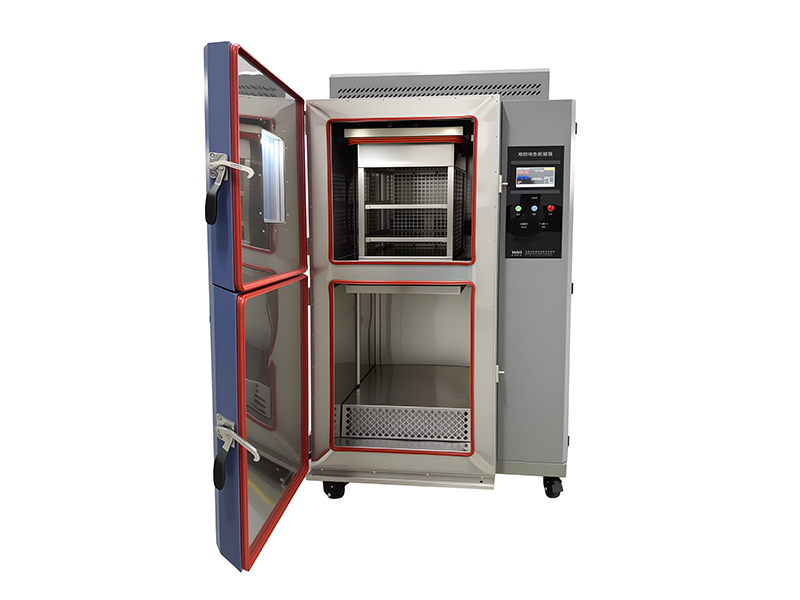
2-Zone Operation
You operate a 2-zone chamber by moving samples between two distinct temperature zones—one hot and one cold. The chamber exposes your products to extreme temperature changes within seconds. You can achieve rapid transitions, often ranging from -65°C to +150°C, which creates intense thermal stress. This process helps you identify issues such as material cracking, delamination, solder joint failure, and performance degradation caused by sudden temperature fluctuations. Modern 2-zone systems maintain precise control and low failure rates, ensuring stable performance throughout your testing cycles.
Tip: You can use a 2-zone Thermal Shock Chamber to simulate real-world conditions for automotive parts, electronics, and household appliances.
Key Features
You benefit from several important features when you choose a 2-zone chamber. The table below highlights the differences between 2-zone and single-zone cycling chambers:
| Feature |
Two-Zone Chamber |
Single-Zone Cycling Chamber |
| Temperature Transition Time |
< 10–30 seconds |
Minutes to tens of minutes |
| Both Zones Active Simultaneously |
Yes |
No |
| Specimen Transfer Mechanism |
Motorized basket/lift |
Not applicable |
| Applicable Standards |
MIL-STD-883, IEC 60068-2-14, JEDEC |
IEC 60068-2-1/2 |
| Primary Failure Mode Detected |
Solder fatigue, delamination, CTE mismatch |
General thermal drift, seal aging |
You can expect a temperature range from −65 °C to +150 °C, with some models reaching −70 °C to +200 °C for semiconductor and aerospace testing. Basket volumes for benchtop units typically range from 2 L to 10 L. Fast recovery times—ideally under 3 minutes—are essential for high-cycle throughput. Cascade refrigeration systems using environmentally compliant refrigerants are standard. You control the chamber with PLC-based touchscreen controllers and export data via USB or LAN.
When to Choose 2-Zone Thermal Shock Chambers
You should select a 2-zone chamber when you need fast transitions and high throughput. These chambers are ideal for:
- Automotive testing of metal components like engine mounts and brake parts.
- Semiconductor device evaluation, especially for harsh operating conditions in 5G technology.
- Household appliance testing, such as assessing plastics and rubber seals for performance under fluctuating temperatures.
You gain reliable results and meet industry standards efficiently. If your protocols require rapid cycling and you want to strengthen your Environmental Test Chamber lineup, a 2-zone chamber offers a practical solution.
3-Zone Thermal Shock Chambers Explained
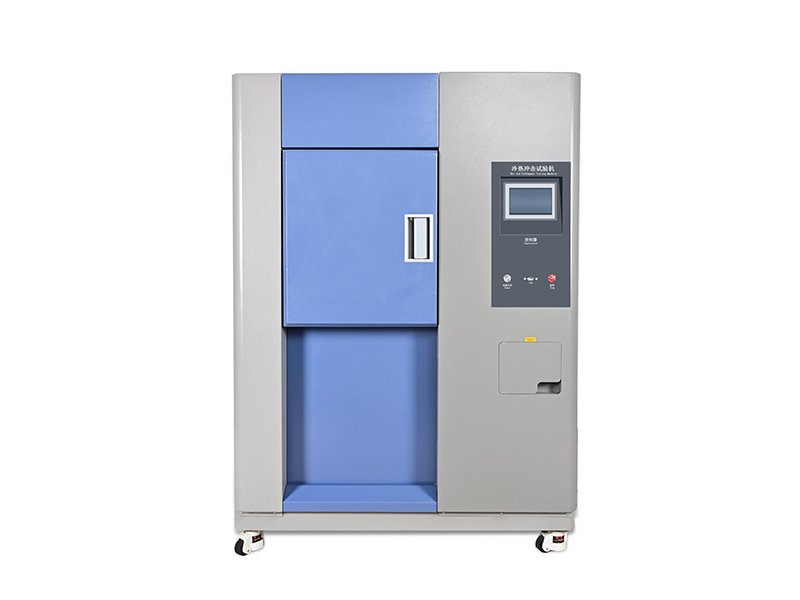
3-Zone Operation
You use a 3-zone chamber to test products by exposing them to three distinct temperature environments: hot, ambient, and cold. Unlike 2-zone models, you do not need to move the sample between chambers. The product stays in one place while the chamber directs air from each zone over it. This design reduces vibration and keeps your measurements accurate. You can run tests that include a room temperature phase, which helps you simulate real-world conditions more closely. If you need to skip the ambient phase, you can operate the chamber in a two-zone mode for added flexibility.
Note: Keeping the sample stationary during testing helps prevent mechanical stress and ensures more reliable results.
Key Features
3-zone Thermal Shock Chambers offer several unique features that set them apart from 2-zone models. The table below highlights the main differences:
| Feature |
2-Zone Thermal Shock Chamber |
3-Zone Thermal Shock Chamber |
| Structure |
Two chambers (hot and cold) |
Three chambers (hot, ambient, cold) |
| Sample Movement |
Samples move between chambers |
Samples remain fixed in place |
| Temperature Impact |
No room temperature impact test |
Allows for room temperature impact test |
You benefit from these features:
- You can test products with rapid temperature changes using separate hot, ambient, and cold sections.
- You keep your samples fixed, which reduces vibration and improves measurement accuracy.
- You can switch between two-zone and three-zone operation, depending on your testing protocol.
When to Choose 3-Zone Thermal Shock Chambers
You should choose a 3-zone chamber when your testing protocols require more flexibility or when you need to simulate real-world temperature cycles, including ambient phases. These chambers work well for industries such as automotive, aerospace, and electronics. For example, you can evaluate the reliability of automotive components, test aerospace equipment for spaceflight, or assess electronic parts under varying temperature conditions. If you need to meet strict industry standards or want to reduce handling risks, a 3-zone chamber gives you the control and versatility you need.
2-Zone vs. 3-Zone: Key Differences
Operation and Control
You will notice clear differences in how you operate and control 2-zone and 3-zone chambers. In a 2-zone chamber, you move samples between two separate temperature zones. You control the timing and sequence of each transfer, which gives you straightforward operation. In a 3-zone chamber, you keep the sample stationary. The chamber directs air from hot, ambient, or cold zones over the sample. This setup allows you to simulate more complex temperature cycles. You can also run a 3-zone chamber in a 2-zone mode by skipping the ambient phase. This flexibility means you can meet a wider range of testing protocols with a single chamber.
Note: 3-zone chambers give you more refined control over temperature profiles. You can program detailed cycles that include or exclude the ambient phase as needed.
Transition Speed
Transition speed plays a key role in thermal shock testing. Faster transitions create more severe stress on your samples. You get the quickest transitions with 2-zone chambers. These chambers can move samples between zones in less than 10 seconds. In contrast, 3-zone chambers usually take 10 to 20 seconds to change temperatures. The following table shows the typical transition times:
| Criteria |
Two-Zone |
Three-Zone |
| Transition Time |
< 10 s |
10–20 s |
If your testing protocol requires rapid cycling, a 2-zone chamber will help you achieve higher throughput. You can complete more cycles in less time, which is important for production environments or accelerated life testing.
Sample Handling
Sample handling differs between the two chamber types. In a 2-zone chamber, you physically move the sample basket between hot and cold zones. This movement can introduce vibration or mechanical stress. You need to consider this if your samples are sensitive to handling. In a 3-zone chamber, you keep the sample fixed in one place. The chamber changes the airflow to expose the sample to different temperatures. This method reduces the risk of mechanical damage and ensures more consistent test results. You also minimize the chance of human error during transfers.
Tip: If you test delicate electronics or components that could be damaged by movement, a 3-zone chamber offers a safer option.
Flexibility and Simulation
You gain more flexibility with a 3-zone chamber. You can simulate a wider range of real-world conditions by including an ambient phase between hot and cold cycles. This feature helps you match industry standards that require room temperature exposure. The table below compares the simulation capabilities of each chamber type:
| Chamber Type |
Zones Included |
| 2-zone |
High-temperature zone, Low-temperature zone |
| 3-zone |
High-temperature zone, Low-temperature zone, Test area |
You can use a 3-zone chamber to run both 2-zone and 3-zone tests. You simply skip the ambient phase if your protocol does not require it. This adaptability makes 3-zone chambers a strong choice for labs that handle multiple product types or need to meet various standards. On the other hand, if your testing always follows a simple hot-to-cold cycle, a 2-zone chamber will meet your needs with less complexity.
Summary: 3-zone chambers provide greater simulation flexibility and refined control, while 2-zone chambers deliver faster transitions and higher throughput. You should match your choice to your testing priorities and the requirements of your protocols. Thermal Shock Chambers remain essential tools for ensuring product reliability in demanding environments.
Compliance and Standards
Industry Testing Standards
You need to follow strict industry standards when you use Thermal Shock Chambers for compliance testing. These standards ensure your products meet safety and reliability requirements. The most recognized standards include:
| Standard |
Description |
| MIL-STD-883 Method 1010 |
Thermal Shock for Microcircuits |
| IEC 60068-2-14 |
Environmental Testing: Change of Temperature |
| JEDEC JESD22-A104D |
Temperature Cycling and Shock |
These standards define test conditions, temperature ranges, and cycle durations. You must select the right protocol to match your product’s intended use.
Chamber Suitability for Standards
You can meet different standards by choosing the right chamber type. Two-zone chambers transfer specimens between hot and cold zones using a mechanical elevator system. This method matches requirements for MIL-STD-883 and JEDEC JESD22-A104D. Three-zone chambers introduce an ambient temperature phase, which helps you comply with IEC 60068-2-14. You gain flexibility by using a chamber that can simulate both two-zone and three-zone tests.
- Two-zone chambers: Move samples between hot and cold zones for rapid cycling.
- Three-zone chambers: Add an ambient phase to meet specific environmental standards.
You should review your testing protocols and select a chamber that aligns with the standards you need to follow.
Reporting and Documentation
You must document every step of your compliance testing. Prepare a comprehensive report, such as LP-463PB-64-01, to show your results. Include diagrams of your test setup and list all equipment used. Record detailed results for each test phase, including post-shock adhesion and visual evaluations. State acceptance criteria for adhesion and performance. Keep calibration records and traceability logs from your temperature controller and data logging system. Note any deviations, corrective actions, or retest outcomes.
Tip: Accurate documentation helps you prove compliance and supports future audits.
Application Scenarios
Electronics and Semiconductors
You rely on Thermal Shock Chambers to test a wide range of electronic products. These chambers help you evaluate circuit boards, semiconductors, and LED lights for functionality after sudden temperature shifts, such as moving from -20°C to +40°C. You use JEDEC-defined protocols to qualify chip-scale packages, BGA components, and flexible PCBs. Standard board-level reliability tests often require 500 to 1,000 shock cycles before you approve devices for mass production. You also test IC packages, memory devices, processors, AI accelerators, and silicon photonics. Thermal shock testing lets you identify package-level reliability risks early, so you can prevent failures before products reach consumers.
Tip: You improve product quality and reduce costly recalls by using Environmental Test Chambers for electronics qualification.
Automotive and Aerospace
You use Thermal Shock Chambers to simulate extreme conditions for automotive and aerospace components. In aerospace, you test avionics boards, navigation modules, composite materials, and spacecraft payloads. These components face rapid temperature changes during high-altitude ascent, supersonic travel, and satellite launch. Automotive manufacturers use drive-in chambers to recreate real-world scenarios, including hot road surfaces and typical humidity levels. You test battery management systems, charging ports, and infotainment systems under temperature profiles ranging from -40°C to +150°C. Custom protocols mirror daily and seasonal thermal stress patterns, helping you ensure reliability throughout a vehicle’s service life.
- You test products for performance under various environmental conditions.
- You confirm that chambers are sealed and resistant to expansion and contraction, which ensures accurate results.
Materials and Components
You use Environmental Test Chambers to evaluate a variety of materials and components. Aerospace applications include testing composite materials and radar modules. Electronics testing covers printed circuit boards, MEMS sensors, microprocessors, and automotive ECUs. You also assess automotive-grade semiconductors and LED modules. Thermal Shock Chambers help you detect weaknesses in materials and components, so you can improve durability and safety.
| Component Type |
Typical Items Tested |
| Aerospace |
Avionics boards, composite materials |
| Electronics |
PCBs, semiconductor chips, LED modules |
| Automotive |
Battery systems, charging ports, ECUs |
You build confidence in your products by using Thermal Shock Chambers to validate performance and reliability.
Choosing the Right Chamber
Decision Factors
You need to match your Thermal Shock Chamber to your testing protocols. Start by listing your main priorities. Do you need fast transitions, or do you want flexibility for different test cycles? Think about the types of products you test and the standards you must meet.
Here is a table to help you compare the main features of 2-zone and 3-zone chambers:
| Feature |
2-Zone Thermal Shock Chamber |
3-Zone Thermal Shock Chamber |
| Thermal Stress |
Provides aggressive thermal stress with instant transitions |
Allows for gradual temperature changes with ambient dwell time |
| Ideal Specimens |
Suitable for ruggedized connectors that can withstand immediate contraction |
Better for delicate components like complex PCB assemblies that may suffer micro-cracking |
| Sample Movement |
Typically involves vertical movement of samples, which can disturb sensitive assemblies |
Samples remain stationary, advantageous for large battery packs or delicate sensor arrays |
| Testing Severity |
Can lead to over-testing if not aligned with product environment |
More aligned with real-world usage scenarios, reducing false failures |
You should choose a 2-zone Thermal Shock Chamber if you want to test rugged parts that need high thermal stress. This chamber works well for connectors, metal parts, and products that can handle quick temperature changes. If you test delicate items, such as complex circuit boards or sensor arrays, a 3-zone chamber gives you better protection. The stationary sample design reduces the risk of damage.
Tip: Always check your industry standards before you decide. Some protocols require an ambient phase, which only a 3-zone chamber can provide.
If you have complex requirements or need to test a wide range of products, you should consult with experts. The team at fluiomet can help you review your protocols and recommend the best Environmental Test Chamber for your needs.
Cost and Maintenance
You must consider both the initial cost and the long-term maintenance of your chamber. A 2-zone Thermal Shock Chamber usually costs less than a 3-zone model. The design is simpler, and you have fewer moving parts to maintain. You also spend less on energy because the chamber only runs two zones.
A 3-zone chamber costs more up front. You pay for the extra zone and the advanced airflow system. Maintenance can be higher because the system is more complex. However, you may save money in the long run if you test delicate products. You avoid sample damage and reduce the risk of false failures.
Note: Regular maintenance keeps your Environmental Test Chamber running smoothly. Schedule checks for refrigeration systems, controllers, and seals. This practice extends the life of your equipment and ensures accurate results.
Future Needs
You should think about your future testing needs before you buy a chamber. Ask yourself these questions:
- Will you need to test new types of products in the next few years?
- Do you expect industry standards to change?
- Will your lab need to handle higher volumes or more complex protocols?
A 3-zone Thermal Shock Chamber gives you more flexibility. You can run both 2-zone and 3-zone tests in one unit. This feature helps you adapt to new standards or product lines. If you only test one product type and do not expect changes, a 2-zone chamber may be enough.
Pro Tip: Choose a chamber that can grow with your business. The fluiomet brand offers a full range of Thermal Shock Chambers and Environmental Test Chambers. You can find models that fit your current needs and allow for future upgrades.
You make the best choice when you align your chamber selection with your protocols, speed, and flexibility needs. If you feel unsure, reach out to a trusted provider like fluiomet. Their experts can help you select the right solution for your lab.
You need to match your Thermal Shock Chamber to your testing protocols. The table below highlights key differences:
| Consideration Dimensions |
Two-Zone Thermal Shock Chamber |
Three-Zone Thermal Shock Chamber |
| Sample Movement |
Yes, by moving the basket |
No, sample remains stationary |
| Mechanical vibration |
Minor vibration is present |
Almost zero |
| Applicable Scenarios |
Structural components, connectors |
Precision electronics, fragile parts |
| Powered during testing |
Complex cable management |
Simple and reliable |
| Thermal Load Impact |
Lower |
Higher |
You should select a two-zone chamber for fast transitions and vibration-resistant samples. Choose a three-zone chamber for delicate products or when you need online monitoring. Always consult industry experts to ensure your Environmental Test Chamber meets current and future needs. If you are ready to select or upgrade, review your protocols and reach out for guidance.
FAQ
What is the main difference between a 2-zone and a 3-zone Thermal Shock Chamber?
You move samples between hot and cold zones in a 2-zone chamber. In a 3-zone chamber, you keep samples stationary and expose them to hot, ambient, and cold air. This setup gives you more flexibility for Environmental Test Chamber protocols.
Can I use a 3-zone chamber for 2-zone testing?
Yes, you can. You simply skip the ambient phase in a 3-zone Thermal Shock Chamber. This feature lets you run both 2-zone and 3-zone tests in one Environmental Test Chamber.
How do I know which chamber fits my testing standards?
Check your industry’s required protocols. If your standard calls for an ambient phase, choose a 3-zone Thermal Shock Chamber. For rapid cycling without an ambient step, a 2-zone Environmental Test Chamber usually meets your needs.
Do these chambers require special maintenance?
You should schedule regular checks for refrigeration, seals, and controllers. Clean the chamber interior and inspect moving parts. Proper maintenance keeps your Thermal Shock Chamber accurate and extends its service life.






 IPv6 network supported