




Through a professional technical team, we provide customers with targeted equipment selection recommendations and comprehensive after-sales services, winning the trust and recognition of customers.
You want to find the ideal thermal shock chamber that fits your testing needs. Matching chamber features to your materials and protocols makes a direct impact on product reliability. For example, custom temperature profiles can simulate mission environments, and temperature capabilities from -70°C to +220°C cover most industrial requirements. The table below shows how key features affect testing protocols and reliability:
|
Feature |
Impact on Testing Protocols |
|---|---|
|
Cooling Method |
Influences temperature uniformity and recovery speed, essential for accurate testing. |
|
Temperature Uniformity |
Ensures that products experience consistent thermal conditions, crucial for reliability. |
|
Recovery Speed |
Affects the time taken to return to set temperatures, impacting the realism of tests. |
Thermal Shock Chambers deliver the best results when you align their specifications with your testing needs and operational goals.
Key Takeaways
-
Define your testing needs by assessing temperature range, sample size, and compliance with industry standards to ensure the right thermal shock chamber.
-
Choose a chamber with a suitable temperature range and fast transition rates to simulate real-world conditions effectively.
-
Consider the construction materials of the chamber, as stainless steel offers durability while aluminum is lighter and more cost-effective.
-
Ensure the chamber has advanced data logging and user-friendly controls to maintain accurate records and streamline testing processes.
-
Evaluate the manufacturer's reputation and after-sales support to ensure reliability and minimize downtime in your testing operations.
Assessing Your Testing Needs
Before you select a thermal shock chamber, you need to define your testing needs. This step ensures that your equipment matches your products, industry requirements, and long-term goals. You should focus on three main areas: temperature range, sample size and load, and compliance with industry standards.
Temperature Range Requirements
Start by identifying the temperature extremes your products must withstand. Different industries and applications require specific temperature ranges and cycle counts. The table below shows common requirements for thermal shock testing in aerospace and electronics:
|
Application Category |
Temperature Range (°C) |
Cycle Count |
|---|---|---|
|
Standard Test |
-55 to +125 |
500-1000 |
|
Grade 0 Components |
-40 to +150 |
1000 minimum |
|
Storage |
-55 to +71 |
N/A |
|
Operating |
-40 to +63 |
N/A |
|
Category B |
-55 to +70 |
N/A |
|
Category C |
-55 to +85 |
N/A |
|
Extended Capabilities |
-75 to +220 |
N/A |
You should match the chamber’s temperature range to your product’s real-world environment. For example, if you test automotive electronics, you may need a range from -40°C to +150°C with up to 1,000 cycles. If you work with aerospace components, you might require even broader ranges. Always check your product specifications and customer requirements before making a decision.
Tip: Consider not only the minimum and maximum temperatures but also how quickly the chamber can transition between them. Fast transitions create more realistic stress conditions for your products.
Sample Size and Load
The size and number of samples you test at once will influence your choice of thermal shock chambers. You need to ensure the internal volume of the test chamber can accommodate your largest product or batch. Overloading the chamber can lead to uneven temperature distribution and unreliable results.
-
Measure your largest sample and estimate the maximum load you plan to test.
-
Leave extra space for airflow around each sample to ensure uniform exposure.
-
If you plan to test multiple items at once, check the chamber’s maximum load capacity.
The thermal properties of your materials also matter. For example:
-
Stainless steel and baking paint affect the chamber’s ability to handle rapid temperature changes.
-
Thicker materials may require longer recovery times to avoid deformation.
-
Proper material selection for both your samples and the chamber itself ensures accurate and repeatable results.
Note: If you expect your testing needs to grow, choose a chamber with a slightly larger capacity to avoid future limitations.
Industry Standards and Compliance
You must ensure your thermal shock chamber meets the standards required for your industry. Compliance guarantees that your test results are valid and accepted by customers, regulators, and certification bodies. The most frequently required standards include:
-
MIL-STD-883 and MIL-STD-810: These standards apply to military and defense equipment, focusing on microelectronics and field-deployed systems.
-
JEDEC JESD22-A106: Used for thermal shock testing of electronic components in the semiconductor industry.
-
IEC 60068-2-14: An international standard for electrotechnical products, covering rapid temperature changes and transfer times.
-
AEC-Q100 and AEC-Q200: Automotive standards for qualifying integrated circuits and passive components.
-
ASTM D1499 and ISO 4892: Standards for thermal cycling of non-metallic materials, such as polymers and composites.
You should review your customer contracts and regulatory requirements to identify which standards apply. Some industries require documentation and traceability for every test cycle.
Checklist:
-
Confirm which standards your products must meet.
-
Verify that your chosen chamber supports the required test protocols.
-
Ensure the chamber’s software can log and export data for audits.
Finally, consider how often you will run thermal shock testing. High-reliability sectors, such as automotive electronics, often require between 100 and 1,000 cycles per test. Frequent cycling places extra demands on both your samples and the chamber, so choose equipment built for durability.
By carefully assessing your temperature range, sample size, and compliance needs, you set the foundation for successful and reliable testing.
Thermal Shock Chamber Specifications
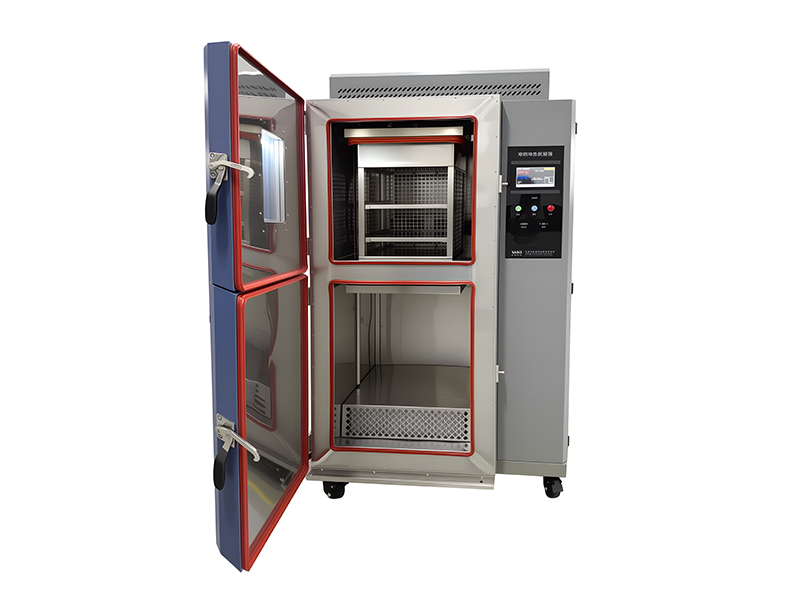
When you select a thermal shock chamber, you need to focus on the technical specifications that directly affect your results. These specifications determine how well the chamber matches your product characteristics and testing protocols. By understanding the details, you can ensure that your investment supports both current and future needs.
Temperature Range and Transition Rate
You should always check the temperature range and transition rate before making a decision. These two factors define the types of products you can test and the accuracy of your thermal shock testing. Most leading thermal shock chambers offer a wide range, which allows you to simulate extreme temperature fluctuations that your product might face in real-world conditions.
|
Temperature Range |
Transition Rate |
|---|---|
|
-70°C to +150°C |
6°C/min to 10°C/min |
|
Advanced models: -100°C to +200°C |
|
A broad temperature range gives you flexibility. For example, if your product must survive both arctic cold and desert heat, you need a chamber that can reach both extremes. The transition rate tells you how quickly the chamber can move from one temperature to another. Faster rates create more realistic stress on your product, revealing weaknesses that slow changes might miss.
Tip: Choose a chamber with a transition rate that matches your test protocols. If you need to simulate rapid temperature changes, look for models with at least 6°C/min transition rates.
Chamber Construction and Materials
The construction and materials of your test chamber play a major role in durability, maintenance, and long-term performance capabilities. You will find two main materials: stainless steel and aluminum. Each has unique characteristics that affect your choice.
-
Stainless Steel Advantages:
-
Provides high durability and resists corrosion.
-
Makes it easy to achieve vacuum-tight welds.
-
Simplifies cleaning and bake-out.
-
Works well with standard sealing systems.
-
-
Aluminum Advantages:
-
Weighs less than stainless steel, making the chamber easier to move.
-
Costs less and is easier to machine.
-
Offers a 10%-20% cost advantage in high vacuum and insulation applications.
-
Suitable for all vacuum regimes, including ultra-high vacuum.
-
|
Material |
Durability |
Maintenance Requirements |
|---|---|---|
|
Stainless Steel |
High durability due to resistance to corrosion. Lower-grade stainless steel may rust or contain non-vacuum-compatible elements. High-grade stainless steel extends lifespan. |
Requires careful selection of grade to avoid rust and ensure vacuum compatibility. High-quality welding is essential for performance and longevity. |
|
Aluminum |
Less durable than stainless steel, especially for knife edge seals. Requires greater thickness to maintain structural integrity and prevent warping. |
Lightweight and affordable but requires high-quality material and proper thickness to avoid warping. Welding quality is also critical. |
You should match the chamber material to your product characteristics and testing environment. Stainless steel works best for high-reliability applications and harsh environments. Aluminum suits lighter loads and situations where cost is a concern. Always check the grade and welding quality, as these factors affect both durability and maintenance.
Performance and Recovery Time
Performance capabilities go beyond temperature range and construction. You also need to consider how quickly the chamber recovers after each test cycle. Recovery time measures how fast the chamber returns to the set temperature after moving your product between zones. Most thermal shock test chambers recover in less than 30 minutes per zone after specimen transfer.
A short recovery time increases your testing throughput. You can run more cycles in less time, which helps you meet tight deadlines and improve efficiency. If you plan to test many products or run frequent cycles, prioritize chambers with fast recovery times.
Note: Fast recovery times reduce downtime and help you maintain consistent test conditions. This consistency is critical for reliable thermal shock testing results.
When you evaluate thermal shock chamber specifications, always match them to your product characteristics and durability requirements. The right combination of temperature range, construction material, and recovery time ensures that your test chamber supports accurate, repeatable, and efficient testing.
Chamber Design and Cooling Methods
You need to understand how chamber design and cooling methods affect the efficiency and accuracy of your thermal shock testing. The right design helps you achieve reliable results and supports your operational goals.
Two-Chamber vs. Three-Chamber Systems
You can choose between two-chamber and three-chamber systems. Each system offers unique characteristics for thermal shock chambers. The table below compares their features:
|
Feature |
Two-Chamber System |
Three-Chamber System |
|---|---|---|
|
Maximum Temperature |
+200°C |
+200°C |
|
Minimum Temperature |
-70°C |
-70°C |
|
Transfer Time |
<10 seconds |
Varies (Basket elevator or pneumatic) |
|
Transition Rate |
30-50°C per minute |
Varies |
|
Dwell Time |
10-30 minutes per zone |
Continuous cycling with ambient recovery |
|
Applications |
Maximum thermal shock severity |
Extended cycling without continuous stress |
|
Testing Efficiency |
Rapid transitions |
Allows ambient recovery |
Two-chamber systems deliver rapid transitions and maximum thermal shock severity. Three-chamber systems allow ambient recovery and extended cycling. You should select a test chamber based on your testing protocol and desired accuracy.
Air-Cooled vs. Water-Cooled Chambers
Cooling methods impact operational environment and maintenance. You can choose air-cooled or water-cooled chambers. The table below outlines their advantages and disadvantages:
|
|
Water-cooled |
Air-cooled |
|---|---|---|
|
Advantages |
Relatively low requirements on ambient temperature, especially in summer. The thermal conductivity of water is higher and the cooling effect is better. Quiet operation, low noise. High power, stable performance. |
Cheap price. Easy to move. |
|
Disadvantages |
Higher cost. Inconvenient to move. |
The requirements for ambient temperature are high, 5~28°C is the best. If the temperature is too high, it will affect the normal operation of the equipment. |
Water-cooled chambers offer stable performance and quiet operation. Air-cooled chambers cost less and are easier to move. You should consider your facility’s environment and maintenance needs before making a choice.
Internal Volume and Loading
Internal volume and loading capacity influence your ability to conduct large-scale testing. Larger chambers accommodate more specimens and complex tests. You can select customized thermal shock chambers for both small labs and industrial facilities. Enhanced loading capacity allows you to run diverse test profiles and improve efficiency.
-
Internal volume determines the size of specimens you can test.
-
Loading capacity affects the number of specimens tested simultaneously.
-
Larger chambers increase versatility and testing capabilities.
As your projects grow in complexity, practical details such as internal volume and loading capacity become more important. You should match these factors to your testing requirements for optimal results.
Control Systems and Data Features
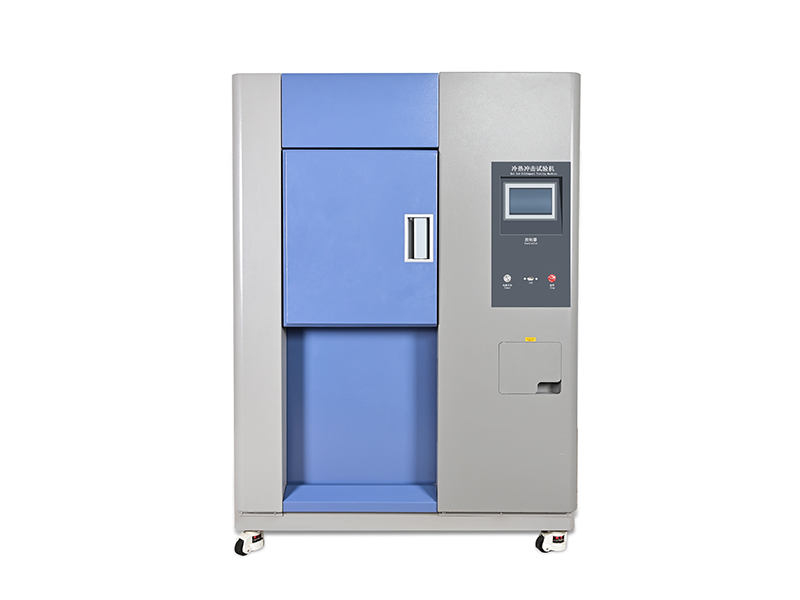
User Interface and Programmability
You interact with the thermal shock chamber through its control system. A clear and flexible user interface makes your work easier and reduces errors. Many laboratory technicians value interfaces that allow remote access and easy programming. For example, the WEBSeason® user interface lets you program, control, and monitor tests from any device, including tablets and smartphones.
|
Feature |
Description |
|---|---|
|
WEBSeason® user interface |
Allows programming, controlling, and monitoring tests from any device, including tablets and smartphones. |
Advanced programmability in control systems gives you more control over test conditions. You can set precise temperature profiles and repeat them exactly. This improves the stability of your tests and ensures consistent results. With advanced programmability, you can:
-
Maintain stable environmental conditions during each test cycle.
-
Achieve accurate and repeatable results by exposing products to the same conditions every time.
-
Control temperature fluctuations within strict limits to identify weaknesses in materials or components.
Tip: A user-friendly interface and advanced programmability help you save time and reduce the risk of mistakes.
Data Logging and Connectivity
Accurate data logging and strong connectivity are essential for quality assurance. You need to record every detail of your tests to meet modern standards and pass audits. Key protocols require continuous monitoring and secure data storage.
-
IEC 61511 requires you to monitor and record safety function performance at all times.
-
ISA-95 and ISA-88 set up structured data models for organized logging in manufacturing.
-
IEC 62443 demands secure data logging to protect against unauthorized access.
Temperature data loggers give you complete records for audits and inspections. They help you:
-
Show compliance with regulations and quality standards.
-
Simplify the auditing process and build trust with stakeholders.
-
Maintain product quality and support HACCP implementation.
Note: Reliable data logging protects your reputation and ensures you meet industry requirements.
Safety and Alarms
Safety features protect both your equipment and your test results. Integrated alarms and controls help you respond quickly to problems and prevent damage. The table below shows common safety features and their functions:
|
Safety Feature |
Function |
|---|---|
|
Differential-pressure switch |
Senses rapid pressure rise, disables heat, activates alarms and other safety systems. |
|
Pressure-relief ports |
Prevent sudden pressure increases, protecting the chamber from damage. |
|
Over-temperature protection |
Monitors air temperature, de-energizes systems if out-of-tolerance temperatures are detected. |
|
Emergency stop control |
Allows quick system shutdown in response to abnormal conditions. |
|
Rapid Purge System |
Dilutes and flushes harmful gases from the chamber to prevent damage. |
You should always check that your chamber includes these safety features. They reduce the risk of equipment failure and help you maintain reliable test results.
Reliability, Support, and ROI
Brand Reputation and Warranty
You should always consider the reputation of the manufacturer when choosing a thermal shock chamber. A trusted brand often signals high reliability and consistent performance. Look for companies with a proven track record in your industry. Reliable manufacturers usually offer strong warranty terms. These warranties protect your investment and ensure your product continues to deliver accurate results. You can compare warranty lengths and coverage details to find the best fit for your needs. A good warranty also reflects the confidence a company has in the characteristics of its product.
After-Sales Support
After-sales support plays a key role in maintaining operational uptime and reliability. You benefit from reliable after-sales service in several ways:
-
You minimize downtime and keep your product running smoothly.
-
You receive fast responses to support inquiries, which helps you solve problems quickly.
-
You gain access to replacement parts, reducing the risk of long delays.
-
You can use installation and training services to improve operational efficiency.
A strong support network ensures your product remains in top condition. You should always ask about the availability of technical support and spare parts before making a purchase.
Cost Efficiency and ROI
You need to evaluate the total cost of ownership before you invest in a thermal shock chamber. The average total cost of ownership for a chamber over ten years can reach $181,000. This figure includes the initial purchase price, energy consumption, maintenance costs, and downtime expenses. A detailed analysis helps you make informed decisions and avoid unexpected costs.
When you calculate return on investment, consider these factors:
-
Temperature range and transition speed
-
Sample dimensions and loading mechanisms
-
Control system flexibility and data capabilities
-
Brand support and operational costs
-
Testing frequency and laboratory utilization patterns
-
Long-term operational requirements
Small chambers often provide cost-effective solutions for occasional testing. If your lab tests fewer than 500 samples each year, a small chamber can help you break even faster. Lower acquisition costs and reduced operational expenses make these chambers a smart choice for many labs.
Tip: Always match the chamber’s features to your product’s testing needs to maximize reliability and long-term value.
Common Mistakes When Choosing Thermal Shock Chambers
Selecting a thermal shock chamber involves more than just matching specifications. Many users make avoidable mistakes that can impact test accuracy, compliance, and long-term costs. By learning about these common pitfalls, you can make better decisions for your testing needs.
Overlooking Future Testing Needs
You might focus only on your current requirements and forget to consider future projects. This approach can limit your lab’s flexibility and force you to upgrade sooner than expected. Some users also select chambers designed for rapid thermal shock when their applications require gradual cycling. This mismatch can lead to over-testing and results that do not reflect real-world conditions. Other frequent mistakes include:
-
Not allowing enough dwell time for large samples to reach the correct temperature, which leads to inaccurate results.
-
Choosing a ramp rate that the chamber cannot achieve, resulting in less severe testing than planned.
-
Mounting specimens incorrectly, which introduces extra stress and skews test outcomes.
Tip: Always review your long-term testing roadmap and select a chamber that can adapt to changing needs.
Ignoring Compliance or Certification
Ignoring compliance or certification requirements can have serious consequences. If you purchase a chamber that does not meet industry standards, you risk legal and financial trouble. The table below highlights some key risks:
|
Consequence |
Implication |
|---|---|
|
Non-compliance with regulations |
You may not obtain certifications or approvals needed for market access. |
|
Legal consequences |
Your business could face legal action for failing to meet standards. |
|
Reputational damage |
Customers and stakeholders may lose trust in your company. |
You may also face fines or costly recalls if your equipment does not meet required standards. Retrofitting chambers later often costs more than choosing the right model from the start. Product quality and safety can suffer, putting your business at risk.
Underestimating Operating Costs
Many users underestimate the true cost of running a thermal shock chamber. Hidden inefficiencies can drive up energy use and increase your utility bills. Maintenance calls may become more frequent if you overlook issues like HVAC drift or building leaks. These problems can escalate quickly, straining your budget and reducing your lab’s productivity.
Note: Review all potential operating expenses, including energy, maintenance, and facility upgrades, before making your final decision.
You can select the right thermal shock chamber by aligning its features with your testing protocols. Start by measuring specimen temperature with thermocouples and documenting your test rationale. Monitor product functionality during testing and analyze samples after each cycle. Consulting with manufacturers helps you understand chamber capabilities and find tailored solutions for your application. Review your current protocols and avoid hazardous materials inside the chamber. Reach out to experts for guidance and optimize your testing process.
FAQ
What is the main purpose of a thermal shock chamber?
You use a thermal shock chamber to test how products handle sudden temperature changes. This process helps you find weaknesses in materials or designs before products reach customers.
How do you determine the right chamber size for your tests?
Measure your largest sample and consider the number of items you want to test at once. Leave space for airflow. If you expect growth, choose a chamber with extra capacity.
Do you need special training to operate a thermal shock chamber?
Most manufacturers offer training. You should learn basic operation, safety procedures, and data logging. Proper training helps you avoid mistakes and ensures accurate results.
How often should you maintain your thermal shock chamber?
-
Check the chamber before each use.
-
Schedule professional maintenance every 6–12 months.
-
Clean filters and inspect seals regularly.
Regular care keeps your chamber reliable and extends its lifespan.

 IPv6 network supported