You want your products to withstand harsh conditions and perform reliably in real-world environments. Thermal Shock Chambers make this possible by simulating sudden, extreme temperature shifts that could otherwise cause hidden weaknesses. When you use these chambers, you can:
-
Uncover vulnerable parts before products reach customers
-
Improve engineering to meet or exceed industry standards
-
Reduce costly warranty claims and avoid product recalls
This approach leads to stronger, more durable products and greater customer satisfaction.
Key Takeaways
-
Thermal Shock Chambers simulate extreme temperature changes to reveal hidden weaknesses in products before they reach customers.
-
Using these chambers improves product durability, reduces warranty claims, and enhances customer satisfaction.
-
Thermal shock testing identifies failure mechanisms like cracking and solder fatigue, allowing for early adjustments in design and materials.
-
Meeting industry certification standards through thermal shock testing builds trust with customers and opens new market opportunities.
-
Implementing thermal shock testing can lower costs by preventing product failures and recalls, making quality assurance more efficient.
Thermal Shock Chambers Overview
How Chambers Simulate Rapid Temperature Changes
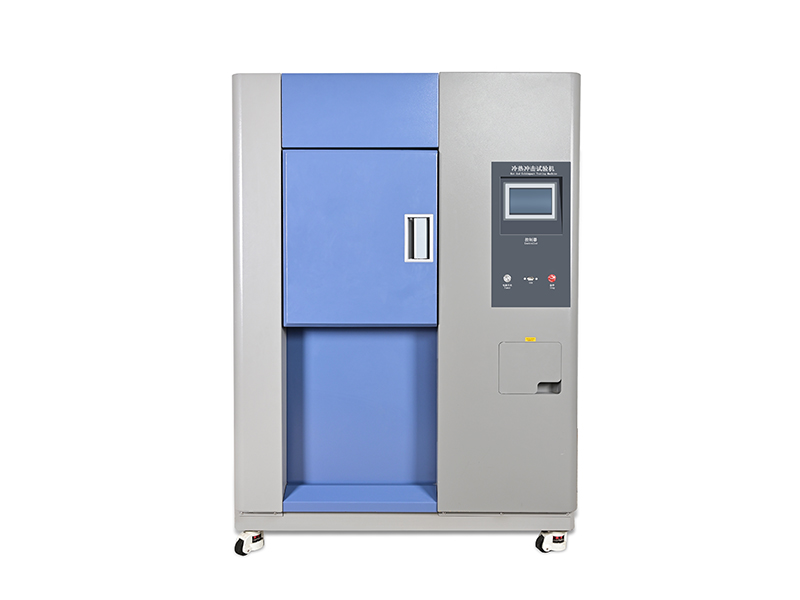
You rely on Thermal Shock Chambers to expose your products to sudden and extreme temperature shifts. These chambers use advanced engineering to create rapid transitions between hot and cold environments. The most common method involves a pneumatically controlled basket that moves your device under test (DUT) between two zones—one hot, one cold. This direct transfer method achieves temperature changes within seconds, simulating real-world thermal shocks.
Temperature monitoring sensors in each zone ensure precise control. You can test products across a wide range, from -70°C to +200°C, with advanced models reaching up to +220°C. The transition speed typically stays within five minutes, allowing you to replicate harsh conditions quickly and efficiently.
Tip: For even faster cooling, some chambers use liquid nitrogen or carbon dioxide to boost the cooling rate, especially when you need to push your products to their limits.
Thermal Shock Test Chambers differ from other environmental test chambers by providing instantaneous temperature changes. Other chambers use slower ramp rates and single-zone designs, which cannot replicate the same level of thermal stress.
|
Feature
|
Thermal Shock Chambers
|
Other Environmental Test Chambers
|
|
Temperature Change Rate
|
Instantaneous transitions between hot and cold
|
Controlled, slower ramp rates
|
|
Design
|
Dual-zone system for rapid sample movement
|
Typically single-zone with gradual changes
|
|
Applications
|
Testing sudden thermal stress on products
|
General environmental testing
|
Air-to-Air Chamber Features
Air-to-air chambers stand out for their versatility and reliability. You can choose between two-zone and three-zone configurations. In a two-zone system, a basket moves your DUT between hot and cold chambers. Three-zone chambers keep the DUT stationary while diverting hot or cold air, which increases throughput and simplifies instrumentation.
|
Feature
|
Air-to-Air (Two-Zone)
|
Air-to-Air (Three-Zone)
|
Liquid-to-Liquid
|
|
Operating Principle
|
Basket moves DUT between hot and cold chambers
|
DUT stays in central chamber; air is diverted
|
Basket moves DUT between fluid tanks
|
|
Advantages
|
Simple mechanism, lower cost
|
No DUT movement, higher throughput
|
High thermal transfer, uniform temperature
|
|
Disadvantages
|
Slower throughput, complex cabling
|
More complex airflow, higher cost
|
Limited to immersible DUTs, higher cost
|
|
Common Applications
|
Electronics, automotive, aerospace
|
High-volume testing, semiconductors
|
Circuit boards, military components
|
Modern air-to-air chambers offer fast temperature switching, uniformity, and real-time data collection. These features help you achieve accurate, repeatable results and streamline your testing process.
Reliability Testing with Thermal Shock Chambers
Identifying Failure Mechanisms
You depend on reliability testing to uncover hidden weaknesses before your products reach customers. Thermal Shock Chambers create rapid temperature changes that reveal failure mechanisms not visible during slower tests. When you expose materials to sudden shifts, you force internal stresses to the surface. This process helps you identify issues such as cracking, solder fatigue, and delamination.
The most common failure mechanisms detected during thermal shock testing include:
|
Failure Mechanism
|
Description
|
|
Cracking and fracture
|
Plastics, ceramics, and glass may break when internal stresses exceed material strength.
|
|
Solder fatigue or separation
|
Rapid expansion differences between PCB laminates and solder joints can create fractures.
|
|
Delamination
|
Multilayer assemblies or coatings can separate due to thermal strain.
|
|
Mechanical binding
|
Interfaces with mismatched coefficients of thermal expansion may bind or stick.
|
|
Electrical drift or intermittent behavior
|
Stress can cause changes in contact resistance, insulation resistance, or signal continuity.
|
Thermal Shock Chambers simulate real-world thermal stress conditions. You can detect latent defects that would otherwise remain hidden. These chambers expose internal stresses, weak bonds, and material incompatibilities. Early detection allows you to adjust materials or designs, improving product reliability.
Note: Identifying these failure mechanisms early helps you prevent costly recalls and warranty claims.
Durability Under Extreme Conditions
You want your products to survive extreme environments. Thermal Shock Chambers push your designs to their limits by subjecting them to rapid temperature cycling. This testing method ensures your products maintain performance and structural integrity under harsh conditions.
You gain several advantages by using thermal shock testing:
-
You verify that components withstand repeated thermal shocks without degradation.
-
You confirm that assemblies remain intact, even when exposed to aggressive temperature swings.
-
You ensure that electrical and mechanical properties stay consistent throughout the product’s life cycle.
Thermal Shock Chambers help you simulate the toughest conditions your products may face. You can confidently release products knowing they have passed rigorous durability tests. This approach builds trust with your customers and strengthens your reputation for quality.
Business Benefits of Thermal Shock Testing
Reducing Product Failures
You want to minimize product failures and protect your reputation. Thermal Shock Chambers help you achieve this by exposing hidden weaknesses early in development. When you simulate rapid temperature changes, you reveal vulnerabilities in solder joints and multilayer PCBs. These weaknesses can cause crack propagation and electrical discontinuity in consumer electronics. By identifying these issues before products reach the market, you reduce the risk of field failures and improve reliability.
Thermal shock testing also lowers the overall cost of quality assurance. You catch material weaknesses before they lead to expensive recalls or warranty claims. This proactive approach results in fewer defects and greater customer satisfaction. You save money during production and after release, making your quality assurance process more efficient.
Manufacturers face several challenges when implementing thermal shock testing. Achieving temperature uniformity is crucial for reliable results. Improper airflow distribution can create hot or cold spots, and variations in heat transfer may cause uneven heating. Accurate sensor placement and calibration are essential for monitoring. The materials used in chamber construction affect temperature stability, and control system performance can lead to fluctuations. Environmental factors like ambient temperature and humidity also impact consistency.
Tip: Avoid common mistakes during testing:
-
Opening the chamber door during operation causes airflow to escape and may result in test failure.
-
Improper grounding during installation poses an electric shock hazard.
-
Leaving interior lighting on disrupts temperature control.
-
Placing flammable items inside the equipment can cause safety incidents.
-
Conducting high-temperature tests from a cold start can damage the equipment.
Meeting Certification Standards
You must meet strict certification standards to enter global markets. Many industry standards require thermal shock testing as part of their qualification process.
"The MIL-STD-883 thermal shock test aims to assess the material's resistance to rapid temperature changes. It defines a cycle starting at ambient temperature, transitioning through specified temperature steps, and returning to ambient conditions. Key terms include 'load' (the devices and fixtures), 'specimen' (the individual device tested), and specific timings for transfer and dwell. After testing, visual examinations are conducted to identify any failures or defects."
Standards like IEC 60068 also specify thermal shock requirements. You ensure compliance by using Thermal Shock Chambers to simulate these conditions. Meeting certification standards demonstrates your commitment to quality and opens doors to new markets. You build trust with customers and partners by proving your products can withstand extreme environments.
Industry Applications
Electronics and Semiconductors
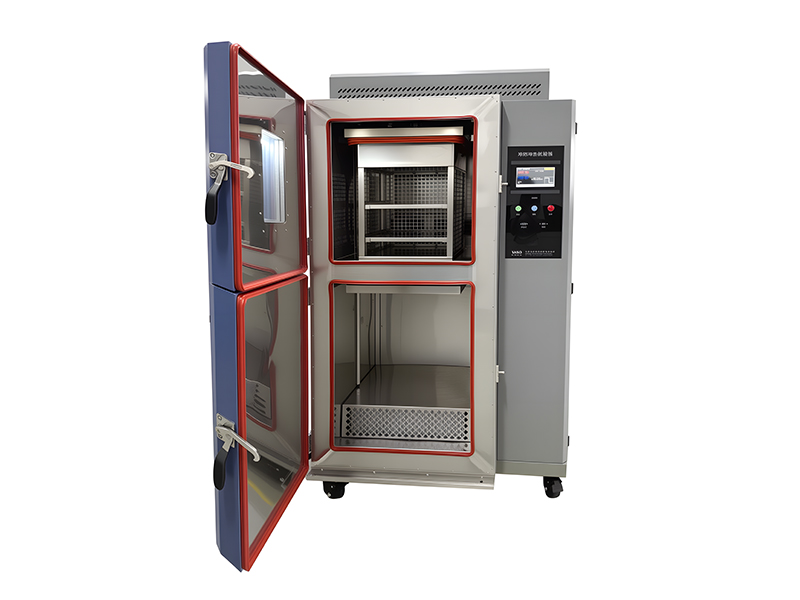
You work in an industry where reliability is non-negotiable. Thermal Shock Chambers help you test printed circuit boards, semiconductor chips, and electronic assemblies for durability. These chambers simulate rapid temperature changes, revealing weaknesses that standard tests often miss. You can identify issues like solder fatigue, delamination, and microcracking before products reach the market.
|
Application Area
|
Description
|
|
Material Performance Evaluation
|
Assess how materials react to extreme temperature changes to ensure reliability.
|
|
Electronics Qualification
|
Test circuit boards and components for durability under rapid temperature shifts.
|
|
Automotive and Aerospace Testing
|
Ensure parts withstand environmental conditions in high-stakes industries.
|
-
You reduce costs from warranties and recalls.
-
You enhance your competitiveness by designing more durable products.
-
You ensure components are ready for consumer use.
Thermal shock testing also benefits products made from metals and plastics. You can validate assembly integrity and prevent costly field failures.
Automotive and Aerospace
You face strict safety and reliability standards in automotive and aerospace sectors. Thermal shock testing simulates the rapid temperature changes that components experience in real-world conditions. You use this process to test battery management systems, navigation modules, and composite materials.
|
Industry
|
Applications
|
|
Aerospace and Defense
|
Avionics boards, navigation modules, composite materials, spacecraft payloads
|
|
Automotive and Electric Vehicles
|
Battery management systems, charging ports, automotive-grade semiconductors
|
-
You identify weaknesses in materials and designs early.
-
You ensure compliance with industry standards, avoiding legal risks.
-
You improve product durability by making design adjustments before mass production.
Thermal shock testing is crucial for metals and plastics in these industries. You evaluate a product’s ability to withstand rapid temperature changes, ensuring long-term reliability and safety.
Medical Devices
You must guarantee that medical devices operate safely under all conditions. Thermal shock testing simulates the extreme temperature variations these devices may encounter. This process ensures that devices function effectively, even in challenging environments.
You validate the performance of plastics, metals, and assemblies used in medical equipment. Regulatory requirements in healthcare demand strict quality control. By using thermal shock testing, you meet these standards and protect patient safety.
Note: Regulatory requirements drive the adoption of advanced testing methods in automotive and healthcare sectors, where product safety is paramount.
Thermal shock chambers give you the tools to rigorously test product durability and reliability. You simulate real-world conditions, uncover weaknesses, and ensure compliance with industry standards. Many industries, including aerospace and automotive, rely on these chambers for quality assurance. You benefit from advanced features like digital controls, automated monitoring, and real-time analytics. Smart systems and predictive maintenance alerts improve usability and performance. As demand grows in electronics and semiconductors, you stay ahead by integrating thermal shock testing into your quality processes. Product reliability remains essential for your business success.
FAQ
What products can you test in a thermal shock chamber?
You can test electronics, automotive parts, aerospace components, medical devices, metals, and plastics. Most chambers accommodate a wide range of sizes and shapes.
How do you ensure accurate temperature transitions?
You monitor chamber sensors and calibrate regularly. Advanced chambers use digital controls for precise temperature regulation.
Tip: Always check sensor placement before starting your test.
Is thermal shock testing required for certification?
Many industries require thermal shock testing for certification. Standards like MIL-STD-883 and IEC 60068 specify these tests.
|
Industry
|
Standard
|
|
Electronics
|
MIL-STD-883
|
|
Automotive
|
IEC 60068
|
Can you automate thermal shock tests?
You can automate most thermal shock chambers. Modern systems offer programmable cycles, real-time monitoring, and data logging.
-
Automation saves time
-
Reduces human error
-
Improves consistency






 IPv6 network supported